What is NVOCC? Complete Guide to NVOCC Services in Global Shipping
Global shipping involves multiple stakeholders, complex documentation, and efficient cargo handling. One of the key players in this ecosystem is a Non Vessel Operating Common Carrier (NVOCC).
Businesses engaged in international trade rely on NVOCC services to manage containerized shipments, optimize logistics costs, and ensure smooth cargo movement across global routes.
What is an NVOCC?
An NVOCC (Non Vessel Operating Common Carrier) is a logistics service provider that transports goods without owning vessels. Instead, they lease space from shipping lines and offer it to customers.
An NVOCC shipping company acts as a carrier to the shipper and a customer to the shipping line, bridging the gap between exporters/importers and ocean carriers.
Role of an NVOCC Shipping Company
An experienced NVOCC shipping company plays a critical role in managing ocean freight logistics efficiently.
Key responsibilities include:
- Booking cargo space with shipping lines
- Issuing bills of lading
- Managing containerized cargo
- Handling documentation and compliance
- Coordinating shipment schedules
This ensures that cargo moves efficiently without direct dependency on vessel ownership.
Understanding Containerized Cargo Services
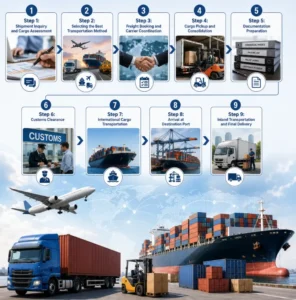
Modern global trade depends heavily on containerized cargo services, which allow goods to be transported safely and efficiently across long distances.
Benefits include:
- Standardized cargo handling
- Reduced risk of damage
- Faster loading and unloading
- Efficient global transportation
NVOCC providers specialize in managing container logistics, ensuring smooth cargo flow between ports.
Importance of LCL Consolidation
Not all shipments require a full container. In such cases, LCL consolidation (Less than Container Load) becomes essential.
Through LCL consolidation, multiple smaller shipments are combined into a single container, allowing businesses to:
- Reduce shipping costs
- Optimize container space
- Access global shipping without full container loads
This is especially beneficial for small and medium businesses involved in international trade.
Advantages of NVOCC Services
Although both operate in logistics, there are key differences:
- Cost-effective ocean freight solutions
- Flexible shipping options
- Access to global shipping networks
- Efficient cargo consolidation
In many cases, both work together to ensure seamless cargo movement.
NVOCC vs Freight Forwarder
A professional international freight forwarder ensures seamless logistics by:
| NVOCC | Freight Forwarder |
|---|---|
| Issues its own bill of lading | Acts as an intermediary |
| Operates as a carrier | Coordinates shipments |
| Handles containerized cargo directly | Manages overall logistics |
Their expertise helps businesses avoid common logistics challenges and maintain a smooth supply chain.
How NVOCC Supports Global Trade
An efficient Non Vessel Operating Common Carrier enables smooth international trade by:
- Ensuring container availability
- Managing cargo consolidation
- Coordinating port operations
- Providing reliable shipping schedules
Their role is essential in maintaining consistency and reliability in global supply chains.
Conclusion
NVOCC services are a vital component of modern shipping and logistics. By offering efficient containerized cargo services and cost-effective LCL consolidation, NVOCC providers help businesses simplify global trade operations.
Partnering with a reliable NVOCC shipping company ensures that shipments are handled professionally, efficiently, and in compliance with international standards.