International Shipping from India: A Practical Guide to Cargo Movement and Logistics
International shipping involves much more than moving cargo from one country to another. For importers, exporters, manufacturers, trading businesses and project-based companies, a shipment can involve freight planning, carrier coordination, documentation, customs procedures, port handling, inland transportation and final delivery.
Choosing the right logistics approach therefore requires an understanding of how the different stages of international cargo movement fit together.
An experienced international shipping company can coordinate these activities through a combination of freight forwarding, ocean and air transportation, customs clearance, container services, warehousing and inland logistics. The right approach depends on the type of cargo, origin, destination, shipment size, delivery timeline and regulatory requirements.
This guide explains the major stages of international shipping from India and how businesses can plan cargo movement more efficiently.
What Does International Shipping From India Involve?
International shipping is the process of moving goods between countries using one or more transportation modes, supported by the documentation, customs and logistics activities required to complete the shipment.
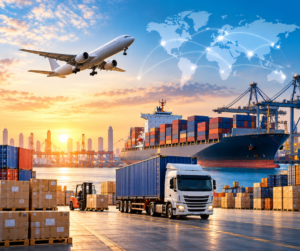
Depending on the shipment, cargo may move by:
- Sea freight
- Air freight
- Road transportation
- Multimodal transportation
- Containerized shipping
- Specialized transportation for oversized or project cargo
A shipment may also require services such as customs clearance, cargo consolidation, warehousing, port coordination and inland delivery.
This is why businesses often work with a shipping company in India or logistics provider that can coordinate multiple parts of the transportation process rather than arranging each activity independently.
For businesses with regular import or export requirements, an integrated approach can simplify communication and reduce the number of separate logistics activities that need to be coordinated.
How the International Shipping Process Works
Although every shipment has different requirements, the international shipping process generally follows a series of connected stages.
1. Understanding the Cargo Requirements
The first step is to understand what is being shipped.
Important factors include:
- Cargo type
- Weight and dimensions
- Number of packages
- Container requirements
- Origin and destination
- Required delivery timeline
- Cargo value
- Handling requirements
- Documentation
- Regulatory considerations
Cargo specifications influence the choice of transportation mode and the logistics services required.
For example, a time-sensitive shipment may be better suited to air transportation, while larger quantities of non-urgent cargo may be transported by sea.
2. Selecting the Right Transportation Mode
The transportation mode should be selected based on the shipment’s requirements rather than simply choosing the fastest or cheapest option.
Sea Freight
Sea transportation is commonly used for larger international shipments, containerized cargo and cargo where transit time allows for ocean transportation.
Businesses moving full containers can use container shipping solutions, while smaller consignments may be consolidated with other cargo.
Air Freight
Air freight can be suitable when delivery speed is an important consideration or when the shipment characteristics make air transportation practical.
You can learn more about the dedicated air freight services available for international cargo requirements.
Multimodal Transportation
Some shipments require more than one transportation mode.
For example:
Factory → Road → Port → Sea → Destination Port → Road → Final Delivery
This requires coordination between different transportation stages rather than treating each movement as an isolated shipment.
What Does a Freight Forwarder Do in International Shipping?
A freight forwarder coordinates the movement of cargo between different stages of the supply chain.
Depending on the shipment, freight forwarding can involve:
- Shipment planning
- Carrier coordination
- Booking
- Cargo consolidation
- Transportation arrangements
- Documentation coordination
- Port coordination
- Customs coordination
- Destination arrangements
- Inland transportation
For businesses that regularly import or export goods, working with an international freight forwarder can simplify coordination across multiple logistics providers.
A freight forwarder may also coordinate different transportation modes when a shipment requires multimodal movement.
For a detailed explanation of these activities, see our Freight Forwarding Services
Why Documentation Matters in International Shipping
Documentation is one of the most important parts of international cargo movement.
The exact documents required depend on the shipment, countries involved, cargo type and applicable regulations. Documentation may include commercial and transportation records required for customs and cargo handling.
Incorrect, incomplete or inconsistent information can create delays during shipment processing.
Businesses should therefore ensure that important shipment information is reviewed before cargo is dispatched.
The documentation process can involve:
- Commercial documentation
- Shipping documentation
- Cargo information
- Customs declarations
- Import documentation
- Export documentation
- Transportation documents
- Supporting regulatory documents
Documentation should correspond accurately with the cargo being shipped.
Customs Clearance: An Important Stage of International Cargo Movement
Cargo entering or leaving a country generally needs to go through the applicable customs procedures.
Customs clearance can involve activities such as:
- Document review
- Cargo classification
- Customs declarations
- Duty and tax assessment
- Examination or inspection
- Regulatory compliance
- Cargo release
The requirements vary according to the shipment and the countries involved.
Businesses should therefore plan customs requirements as part of the overall shipping process rather than treating customs clearance as something to handle only after cargo reaches the port.
Our Customs Clearance Services cover customs-related support as part of international cargo movement.
Container Shipping and NVOCC Services
Containerized cargo requires coordination between shippers, carriers, ports and other logistics participants.
For businesses shipping containerized cargo, the process can involve:
- Container booking
- Cargo planning
- Documentation
- Carrier coordination
- Bill of lading arrangements
- Port coordination
- Container movement
- Destination handling
An NVOCC, or Non-Vessel Operating Common Carrier, can coordinate containerised ocean transportation without operating the vessels themselves.
This can be particularly relevant for businesses managing regular container shipments.
For more information, see our NVOCC Services.
LCL Shipping for Smaller Cargo Volumes
Not every business needs to book an entire container.
When cargo does not require a full container, LCL consolidation can provide an alternative by combining shipments from different shippers into a shared container.
LCL can be relevant for businesses that:
- Have smaller shipment volumes
- Do not require a full container
- Ship internationally on a less-than-container-load basis
- Need an alternative to booking an entire container
However, the appropriate option depends on cargo volume, destination, transit requirements and overall shipment economics.
Businesses should compare the available transportation options rather than selecting a shipping method based only on cargo size.
What Happens After the Cargo Reaches the Destination?
International shipping does not necessarily end when the cargo reaches the destination port.
Depending on the shipment, additional activities may include:
- Customs clearance
- Port handling
- Container release
- Inland transportation
- Warehousing
- Distribution
- Final delivery
This is where coordination between different logistics services becomes important.
For example, once cargo is cleared, it may need to be transported from the port to a warehouse or the customer’s facility.
Our Land Transportation Services can be relevant for inland cargo movement after port or customs-related activities.
Where cargo requires storage or distribution support, warehousing & distribution services can form part of the wider logistics process.
How Businesses Can Make International Shipping More Efficient
Businesses can reduce avoidable shipping problems by planning the shipment before cargo is dispatched.
Provide Accurate Cargo Information
Share accurate:
- Dimensions
- Weight
- Quantity
- Cargo description
- Packaging information
- Origin
- Destination
Incorrect cargo information can affect transportation planning and documentation.
Prepare Documentation Early
Don’t wait until cargo reaches the port to discover that important information is missing.
Documentation requirements should be reviewed during shipment planning.
Select Transportation Based on the Actual Requirement
The cheapest transportation option isn’t always the most economical when delays, additional handling or missed delivery timelines are considered.
Consider:
- Transit time
- Cargo value
- Shipment size
- Delivery deadline
- Handling requirements
- Total logistics cost
Plan Customs Requirements in Advance
Customs requirements should form part of the shipment plan from the beginning.
This helps businesses understand what information and documentation may be required before cargo reaches the relevant customs point.
Coordinate the Entire Cargo Movement
When multiple logistics providers are involved, communication gaps can create unnecessary delays.
A coordinated logistics approach can make it easier to manage:
Origin → Transportation → Port → Customs → Destination → Inland Delivery
Choosing an International Shipping Company in India
Businesses evaluating an international shipping company should look beyond the basic promise of moving cargo.
Consider whether the logistics provider can understand your shipment requirements and coordinate the services necessary for the complete movement.
Important factors can include:
- Experience with the required cargo type
- Freight forwarding capabilities
- Transportation options
- Customs coordination
- Container shipping capabilities
- Inland transportation
- Warehousing requirements
- Documentation support
- Communication throughout the shipment
- Ability to coordinate multiple logistics stages
The right provider depends on the specific requirements of the shipment rather than simply choosing the company with the broadest list of services.
When Do You Need End-to-End Shipping & Logistics Services?
Not every shipment requires every logistics service.
A simple shipment may only require freight forwarding and transportation.
Another shipment may require:
Freight Forwarding + NVOCC + Customs Clearance + Land Transportation
A project shipment could require:
Project Cargo + Freight Forwarding + Customs Clearance + Specialized Transportation
The important point is to identify the actual requirements of the shipment and then coordinate the necessary services.
This approach allows businesses to build global logistics solutions around their cargo rather than selecting unrelated services independently.
International Shipping for Different Types of Businesses
International shipping requirements vary considerably between industries.
Manufacturers
Manufacturers may need to regularly import raw materials, components or machinery and export finished products.
Engineering Companies
Engineering businesses may move machinery, equipment and specialized industrial cargo.
EPC and Infrastructure Companies
Large projects may involve oversized equipment, multiple suppliers and time-sensitive project schedules.
Trading Businesses
Traders may manage shipments involving different suppliers, destinations and cargo volumes.
Pharmaceutical and Chemical Businesses
These shipments may involve additional handling, documentation and regulatory considerations depending on the products.
Retail and Consumer Businesses
These businesses may focus heavily on shipment frequency, inventory availability and delivery schedules.
A logistics provider should therefore understand the cargo and supply-chain requirements of the business rather than applying the same transportation approach to every shipment.
Building a More Connected International Logistics Process
International shipping works best when the different stages of cargo movement are considered as one connected process.
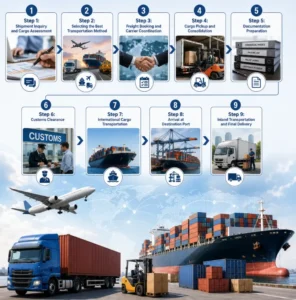
A typical shipment may involve:
Cargo Planning
↓
Freight Forwarding
↓
Carrier / Transportation Coordination
↓
Documentation
↓
Customs Clearance
↓
Port / Cargo Handling
↓
Destination Transportation
↓
Warehousing / Distribution
↓
Final Delivery
Not every shipment will follow exactly the same sequence.
The transportation mode, cargo type, origin, destination and regulatory requirements determine which stages are necessary.
For businesses working across international markets, having access to coordinated shipping & logistics services can simplify this process and provide a clearer view of the shipment from origin to destination.
Conclusion
International shipping from India involves much more than selecting a carrier and moving cargo between two countries. Successful cargo movement depends on appropriate transportation planning, accurate documentation, customs coordination, freight management and reliable movement at both origin and destination.
For importers, exporters, manufacturers and trading businesses, the right logistics approach should be based on the characteristics and requirements of each shipment.
An experienced logistics company in India can help coordinate the different stages of international cargo movement, from freight forwarding and container shipping to customs clearance, inland transportation and warehousing.
The objective should not simply be to move cargo from one location to another, but to create a global logistics solution that is appropriate for the shipment, business requirements and delivery objectives.